

The first registered user is assigned as the Admin, who has access to everything in the account. The remaining 3 roles can be assigned to other users by the Admin.
A. Defining the permissions of a role
1
Open Settings and select the Roles tab
In the Pickcel console, open the Settings module and select the Roles tab. The Manager, Editor, and Operator roles appear as cards on the left, each with a short summary of what it is for. Click a role to see its permissions.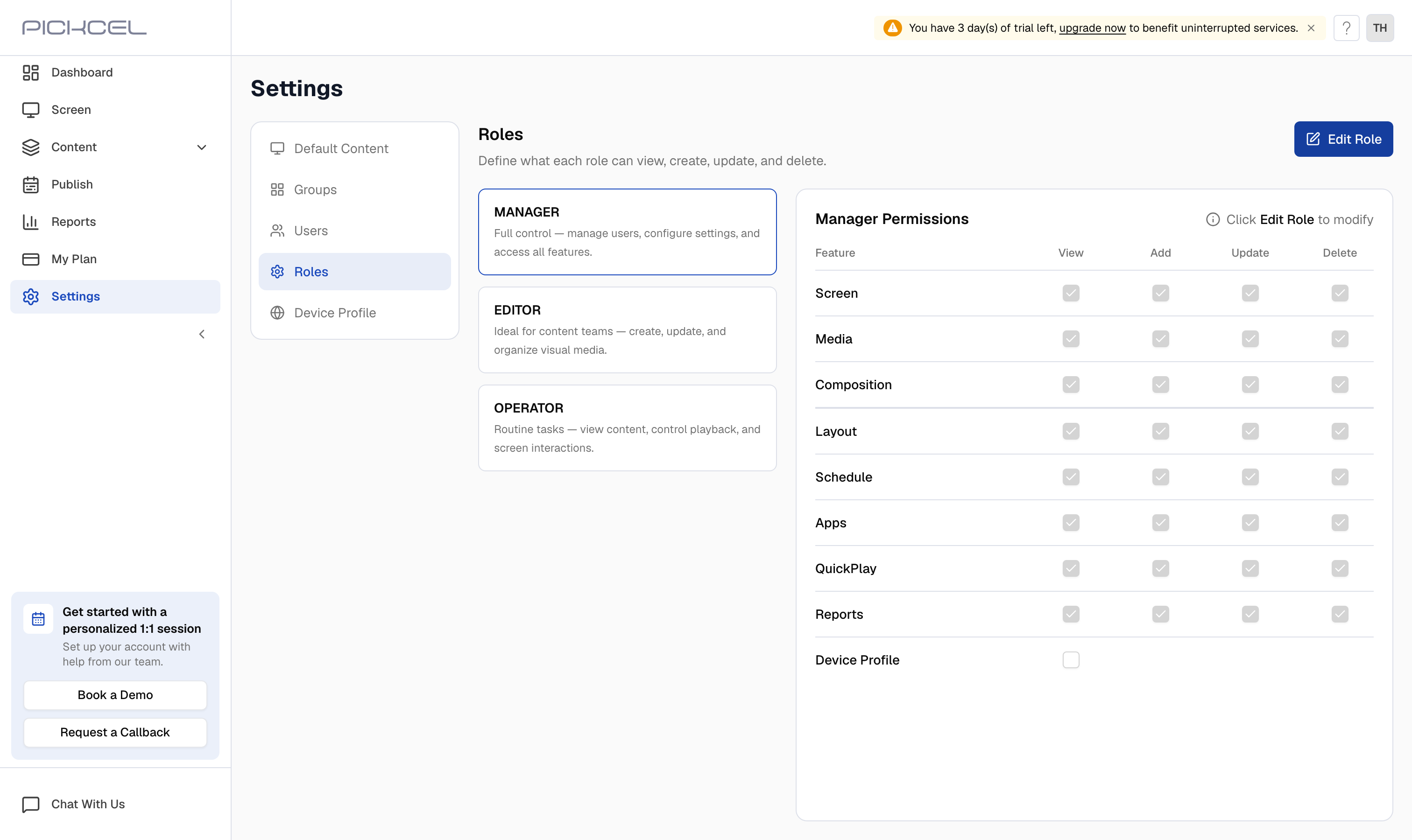
2
Click Edit Role and set permissions
Click Edit Role. The permissions matrix becomes editable: for each feature (Screen, Media, Composition, Layout, Schedule, Apps, QuickPlay, Reports, Device Profile), tick the View, Add, Update, and Delete checkboxes you want to allow for that role. Click Update Role to save.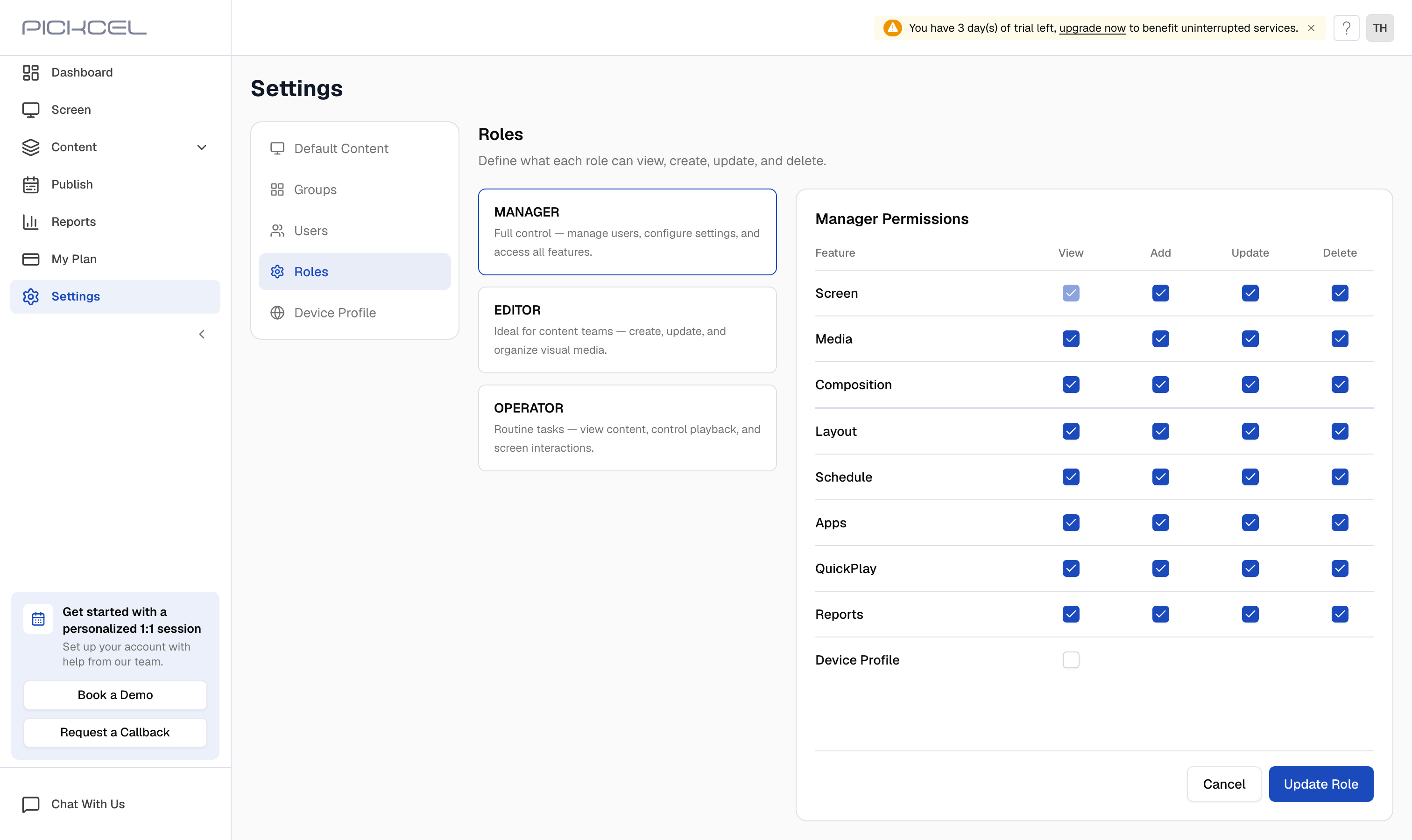
B. Assigning a role to a user
You assign a role when you add a user. Each user belongs to a role and at least one group.1
Open the Users tab and click Add User
In Settings, switch to the Users tab and click Add User.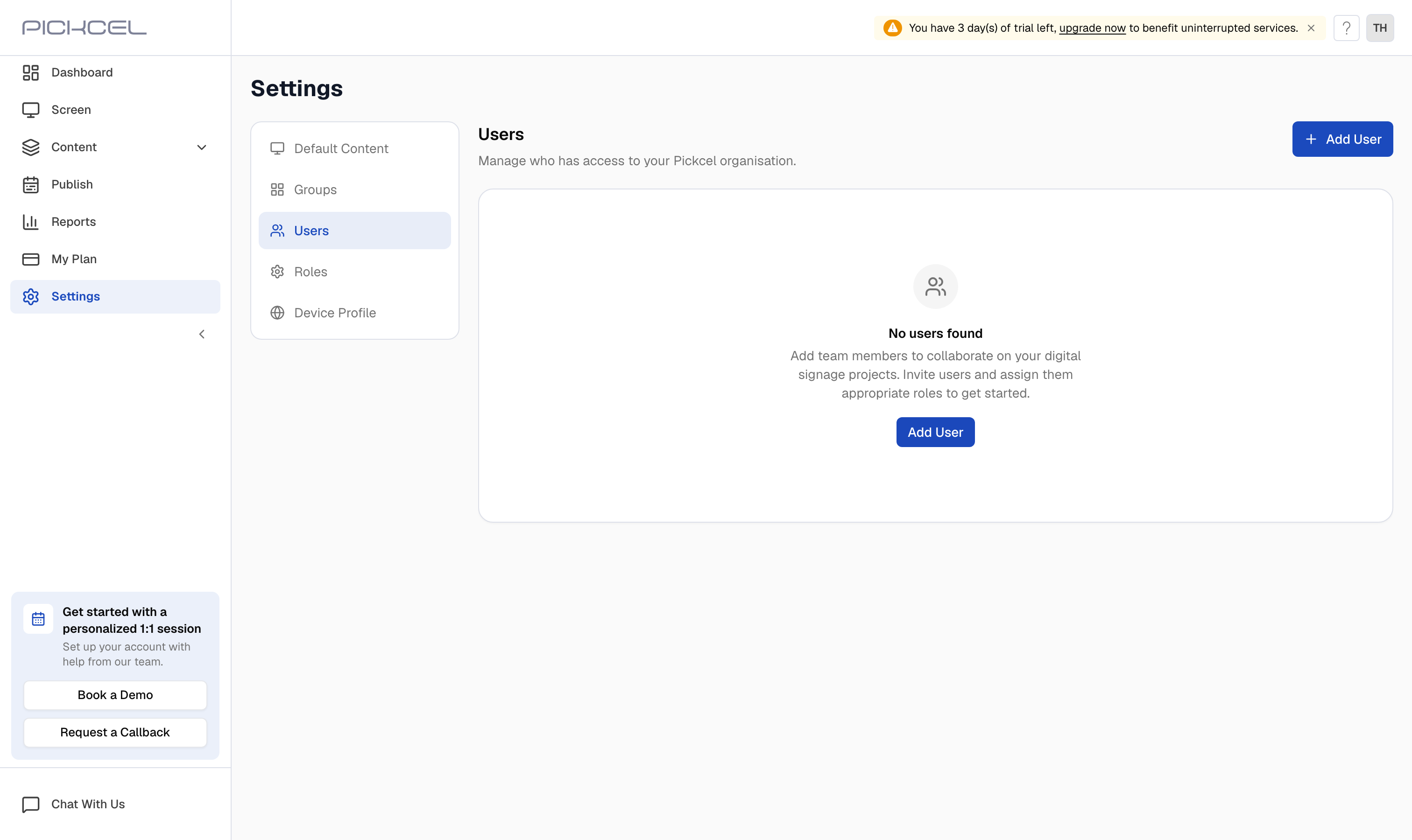
2
Enter the details and select a role
In the Add User dialog, enter the User name, User email, and Password, then choose the role from the Select role dropdown (Manager, Editor, or Operator). Tick at least one Group so the user has access.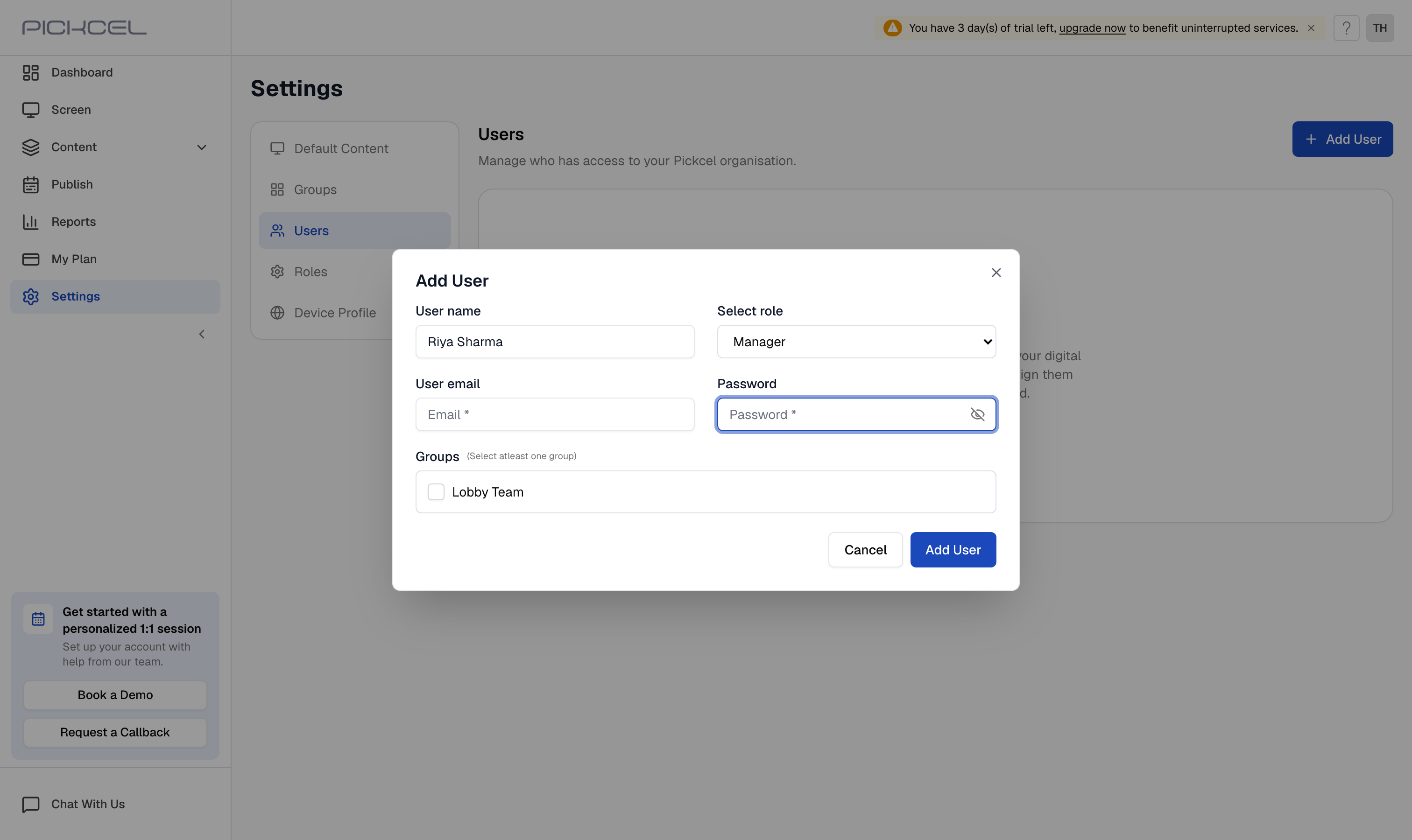
3
Click Add User
Click Add User to save. The user is created with the role and permissions you defined.